
In regulated environments, a bio-decontamination process must produce consistent and reproducible results. The validation of a VHP cycle demonstrates that the process meets the defined objectives and that it can be reproduced under controlled conditions.
This approach plays a vital role in cleanrooms, isolators, RABS and other critical areas where contamination control is an ongoing requirement. It relies on the monitoring of cycle parameters, the reproducibility of operations and the traceability of associated data.
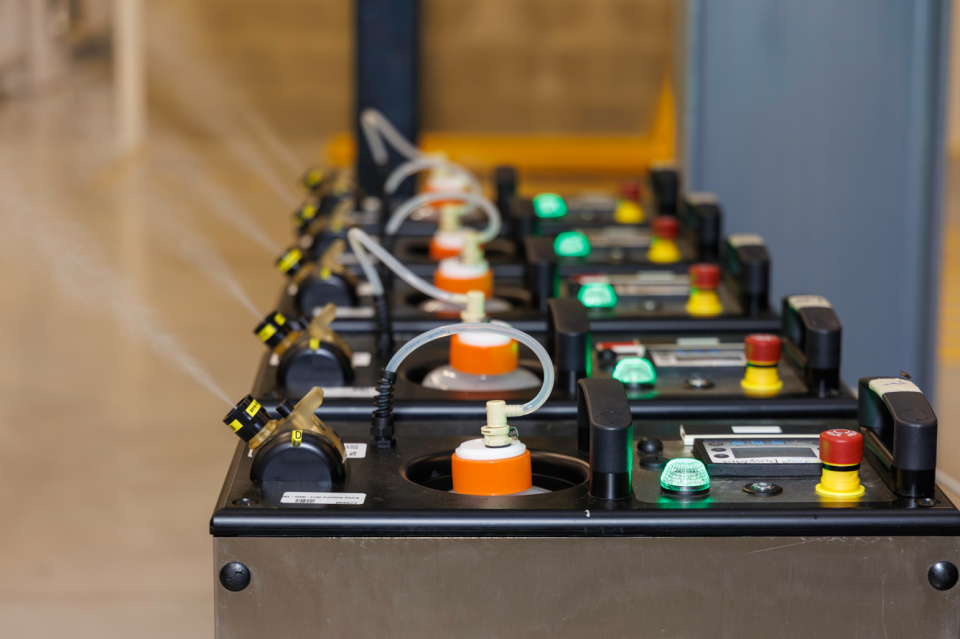
Why is the validation of a VHP cycle essential?
Validation demonstrates that a VHP cycle operates in accordance with the objectives defined for the environment being treated. It provides evidence to confirm the consistency and repeatability of the biodecontamination processes.
In regulated sectors, this approach also helps to strengthen process control. It ensures that the cycle parameters remain suited to the facility’s constraints and the requirements of the application in question.
Validation is therefore a key step in implementing a reliable and well-documented bio-decontamination strategy.
Log₆ reduction: central to the validation of VHP cycles
Log₆ reduction is a widely used benchmark in the field of bio-decontamination. It enables the effectiveness of a process to be assessed under defined conditions.
In the context of a VHP cycle, this objective is one of the factors taken into account during validation procedures. It enables verification that the expected performance can be achieved in a reproducible manner.
However, log 6 reduction should not be considered in isolation. Treatment conditions, environmental characteristics and cycle parameters also play a role in the result obtained.
What factors influence the validation of a VHP cycle?
The validation of a VHP cycle depends on several factors. Ensuring these factors are under control contributes to the consistency of the process and the reproducibility of operations.
Cycle settings
Temperature, relative humidity, hydrogen peroxide concentration and the times associated with the various stages of the cycle are among the parameters to be taken into account.
Controlling these parameters helps to maintain consistent processing conditions from one operation to the next.
Characteristics of the treated environment
Each environment has specific characteristics that influence the course of the cycle.
The volume of the area, the layout of the equipment and the airflows within the facility can all have an impact on the bio-decontamination conditions. These factors must therefore be taken into account in the validation process.
The reproducibility of operations
A validated cycle must be capable of being reproduced under controlled conditions.
Reproducibility is essential for ensuring the consistency of results obtained over time. It also contributes to the overall control of the bio-decontamination process.
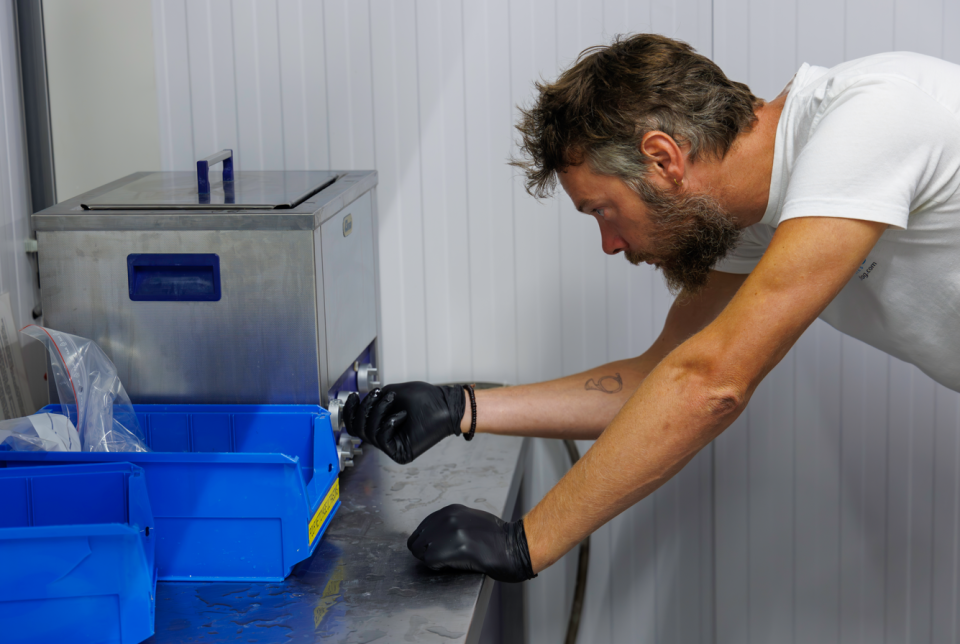
Traceability of VHP cycles in regulated environments
Traceability plays a key role in bio-decontamination operations. It enables a record to be kept of the cycles carried out and the parameters recorded during treatments.
This ability to document operations facilitates the monitoring of activities and contributes to process control. It is also a key factor in environments where compliance requirements are high.
Effective traceability thus provides the information needed to analyse, document and monitor the operations carried out.
Validation of VHP cycles: the importance of process control
The validation of a VHP cycle does not rely solely on the final result. It also depends on the ability to control the parameters that influence the process.
Temperature, relative humidity, air circulation and the characteristics of the environment being treated all have a direct impact on the conditions for biological decontamination. Controlling these factors contributes to the stability of the process and the reproducibility of operations.
This approach helps to ensure the consistency of cycles and to safeguard their implementation in critical environments.
Solidfog’s approach to validating bio-decontamination cycles
At Solidfog, validation is an integral part of the VH₂O₂ bio-decontamination approach. The solutions developed by the company are designed for environments where process control, traceability and reproducibility are key considerations.
Cleanrooms, isolators, RABS and laboratories each have their own specific constraints. Taking these specific characteristics into account helps to ensure that cycles are implemented that are tailored to the requirements of each facility.
This approach forms part of a comprehensive strategy for process control and supporting users in their bio-decontamination operations.
How can operations be made safer using validated VHP cycles?
The validation of a VHP cycle is essential to ensuring the consistency and reproducibility of bio-decontamination operations. It relies on control of the process parameters, taking into account the characteristics of the environment being treated, and the traceability of the operations carried out.
A log 6 reduction, cycle reproducibility and data monitoring all contribute to ensuring the safety of operations in regulated environments.