
The success of a bio-decontamination process does not depend solely on the technology used. The effectiveness of a VHP cycle also depends on the control of several parameters that directly influence the course of the process.
In cleanrooms, isolators, RABS or laboratories, each stage of the cycle must be monitored in order to achieve consistent and reproducible results. A good understanding of these mechanisms also helps to facilitate qualification and validation procedures.
Find out more about VHP decontamination
The VHP cycle at the heart of bio-decontamination in critical environments
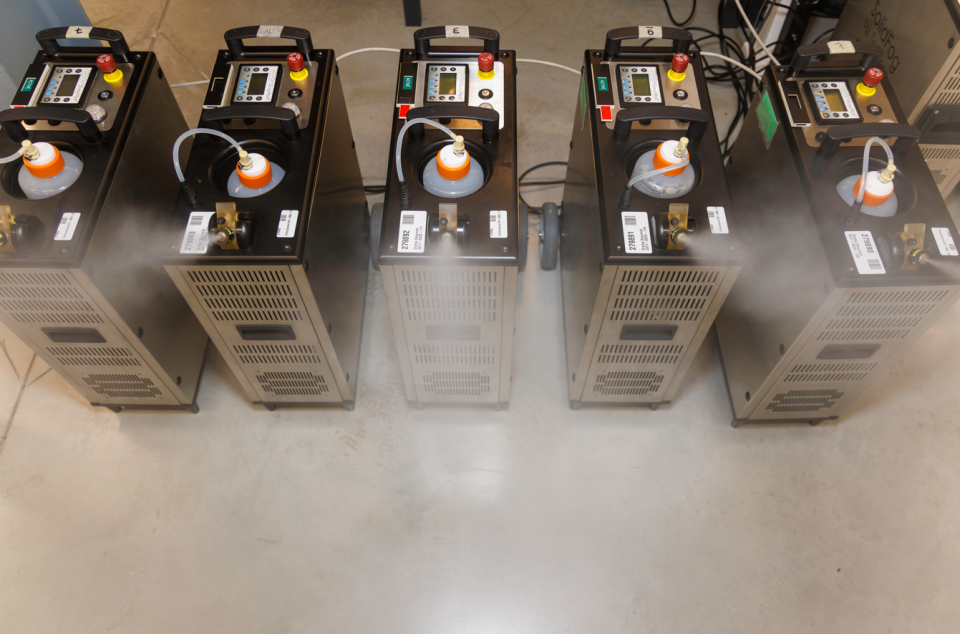
A VHP cycle involves dispersing atomised hydrogen peroxide within a sealed environment to carry out a bio-decontamination process. This technology is used in sectors where controlling contamination is a major challenge.
However, the outcome does not depend solely on the product used. Treatment conditions, the characteristics of the facility and the cycle parameters also play an important role. This is why defining and monitoring the cycle are essential in regulated environments.
The different stages of a VHP cycle
A VHP cycle generally consists of several successive phases. Each stage contributes to the quality of the process and its reproducibility.
Preparing the environment
Before the cycle begins, the environment must be prepared. The volume to be treated, the configuration of the equipment and the initial conditions of the area are taken into account in order to define the process parameters.
This stage creates the conditions necessary for the bio-decontamination process to proceed smoothly.
The diffusion of hydrogen peroxide
The system then disperses hydrogen peroxide throughout the treated area.
The aim is to achieve an even distribution throughout the entire volume in question. This uniformity helps to ensure consistent results and the repeatability of the process.
The contact time required for biodecontamination
After dispersion, the hydrogen peroxide remains in the area for a specified period.
This phase enables the cycle to achieve the objectives set for the biodecontamination process. The contact time must be adapted to the characteristics of the environment being treated.
Ventilation and a return to operating conditions
The final step is to reduce the residual concentration of hydrogen peroxide in the environment.
Once this phase is complete, the area can return to normal operating conditions in accordance with established procedures.
What factors influence the effectiveness of a VHP cycle?
The effectiveness of a VHP cycle depends on several factors. Controlling these factors helps to ensure the stability of the process and the reproducibility of the results.
The temperature
Temperature influences the overall conditions of the cycle. It is one of the parameters that must be taken into account when defining and controlling the process.
Relative humidity
Relative humidity also plays a role in the cycle. This parameter is monitored in order to maintain processing conditions suited to the environment in question.
The volume of the area to be treated
The parameters of a cycle will not be the same for an isolator, a cleanroom or a laboratory. The volume to be treated directly influences the bio-decontamination strategy employed.
Air circulation
The air flows within the system help to disperse the hydrogen peroxide. Taking these into account helps to ensure greater uniformity of treatment.
The concentration of hydrogen peroxide
The concentration of hydrogen peroxide must be tailored to the objectives of the cycle and the characteristics of the environment being treated. Controlling this concentration helps to ensure the consistency of the biodecontamination process.
Why is controlling the parameters essential for a VHP cycle?
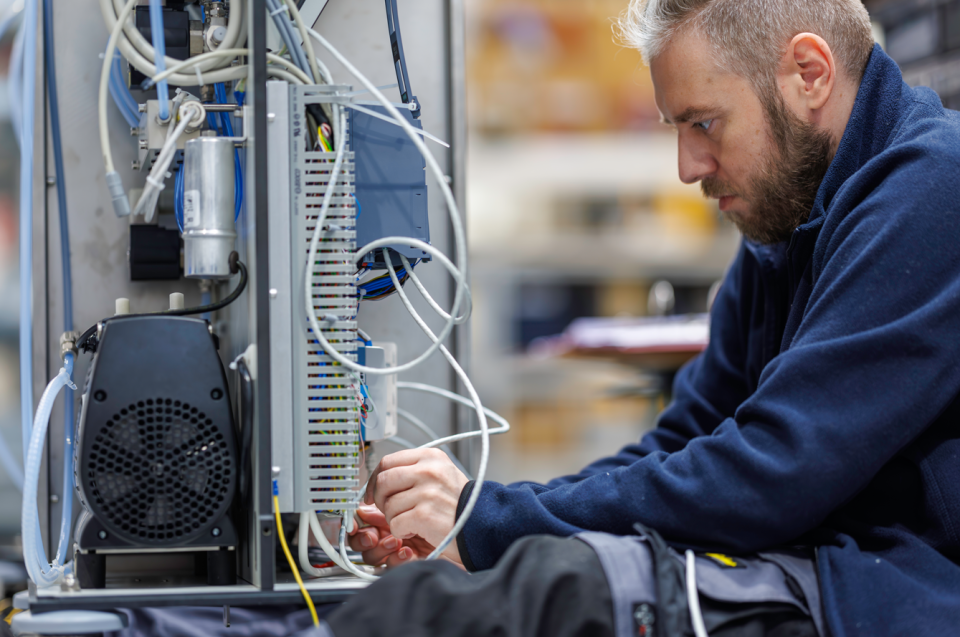
In regulated environments, it must be possible to replicate each cycle under controlled conditions. Managing process parameters helps to reduce variations between runs and improve the consistency of the results obtained.
This approach also facilitates qualification, validation and traceability procedures. It is therefore a key factor for industries where controlling contamination is an ongoing challenge.
The VHP and VH₂O₂ cycle: understanding Solidfog’s approach
The terms VHP and VH₂O₂ are often used in the field of hydrogen peroxide bio-decontamination. Regardless of the terminology used, the objective remains the same: to ensure a controlled process that is suited to the environment being treated.
At Solidfog, controlling the cycle parameters is of paramount importance. This approach enables us to support bio-decontamination operations in cleanrooms, isolators, RABS and other critical areas.
Solidfog’s expertise in managing bio-decontamination cycles
Solidfog develops solutions specialising in H₂O₂-based bio-decontamination for regulated environments. The company draws on its process experience and its understanding of the specific constraints of the pharmaceutical, biotechnology and scientific sectors.
This expertise helps to ensure that cycles are implemented that are tailored to the requirements of each facility and the objectives of each bio-decontamination operation.
Mastering a VHP cycle to ensure the safety of bio-decontamination operations
The operation of a VHP cycle relies on several complementary stages and on parameters that must be precisely controlled. Temperature, relative humidity, the volume treated, air circulation and the concentration of hydrogen peroxide all have a direct influence on the course of the process.
A thorough understanding of these factors helps to improve the management of bio-decontamination operations and enhance the reproducibility of cycles in critical environments.