
Airborne disinfection (AD) meets specific needs in environments where microbiological contamination control is a technical, regulatory or sanitary requirement. This process, based on the diffusion of vaporized hydrogen peroxide (VH₂O₂), is used across various industries that share a common objective: ensuring decontaminated, validated and compliant environments.
The pharmaceutical industry: a key sector for airborne disinfection
The pharmaceutical industry is the historical sector for airborne disinfection. Good Manufacturing Practices (GMP) impose strict decontamination protocols in all aseptic production areas. Airborne disinfection provides a documented and reproducible response to these requirements.
Sterile areas and cleanrooms
Grade A, B, C and D cleanrooms require validated decontamination cycles between production campaigns or in the event of confirmed contamination. Airborne disinfection enables treatment of the entire volume — horizontal and vertical surfaces, equipment and inaccessible corners — without extensive manual intervention.
Isolators and RABS
Aseptic production isolators and Restricted Access Barrier Systems (RABS) use airborne disinfection as a mandatory step before each production cycle. VH₂O₂ is used to achieve log-6 microbiological reduction levels in accordance with European Medicines Agency (EMA) and FDA requirements.
Biopharmaceutical and biotechnology production areas
Facilities producing vaccines, monoclonal antibodies, cell therapies and gene therapies integrate airborne disinfection into their contamination control strategy. These environments handle sensitive substances for which any cross-contamination represents a direct risk to final product quality.
The healthcare sector: a complementary application of airborne disinfection
In healthcare facilities, airborne disinfection complements cleaning and disinfection protocols in high-risk areas. It helps reduce healthcare-associated infections (HAIs) and the transmission of multidrug-resistant bacteria.
Operating rooms and high-risk areas
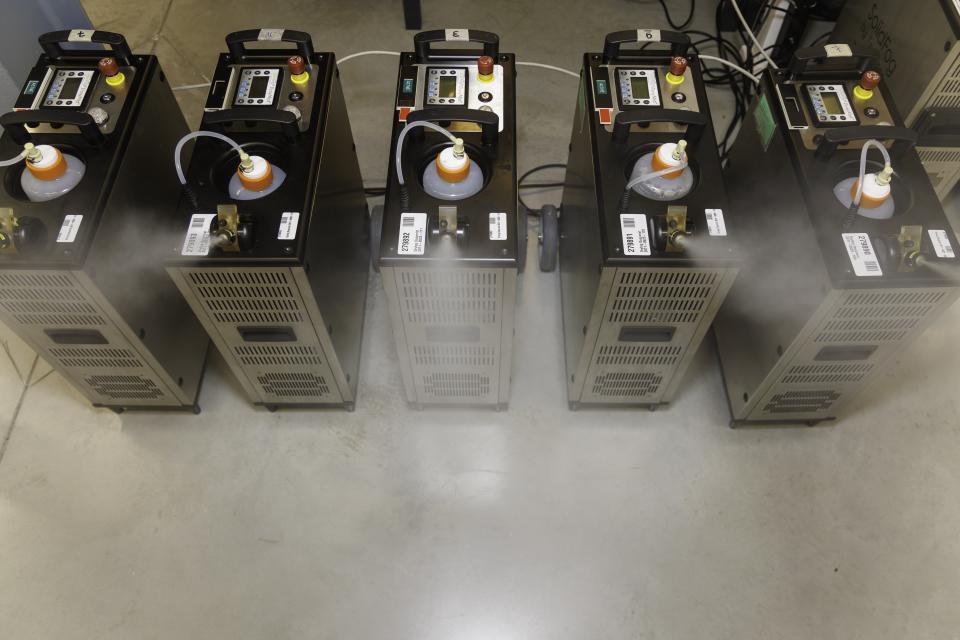
Airborne disinfection can be used to decontaminate operating rooms, isolation rooms and intensive care units after the treatment of patients presenting infectious risks. The process enables homogeneous treatment of the entire volume, including areas difficult to access during manual cleaning.
Central sterilization departments
Central sterilization units process reusable medical devices. Airborne disinfection is used to decontaminate workspaces and packaging equipment in order to maintain microbiological cleanliness levels compliant with healthcare requirements.
Research and quality control laboratories
Laboratories handling pathogens, cell cultures or sensitive substances use airborne disinfection to secure their working environments.
Microbiology and virology laboratories
Biosafety level 2 and 3 laboratories use airborne disinfection to decontaminate spaces after handling biological agents. This process ensures pathogen inactivation on all surfaces, including hard-to-reach areas inside microbiological safety cabinets (MSC).
Microbiological safety cabinets and laminar flow hoods
Microbiological safety cabinets and laminar flow hoods require internal decontamination before maintenance operations or changes in use. Airborne disinfection is applied to fully and traceably treat the enclosure in compliance with regulatory requirements.
Pharmaceutical quality control laboratories
Quality control laboratories integrate airborne disinfection into their environmental monitoring plans. Periodic decontamination of workspaces limits environmental contamination and protects the integrity of ongoing analyses.
The food and cosmetics industries
Airborne disinfection is also used in the food and cosmetics industries, where contamination control directly impacts consumer safety and regulatory compliance.
High-risk food production areas
Cutting workshops, sterile packaging rooms and fresh product manufacturing areas require regular decontamination to limit the proliferation of pathogenic microorganisms such as Listeria and Salmonella. Airborne disinfection enables rapid and documented treatment of these spaces between production cycles.
Cosmetic manufacturing lines
Cosmetic manufacturers subject to cosmetic GMP requirements (ISO 22716) use airborne disinfection to maintain microbiological cleanliness in production areas. The process adapts to automated production lines without requiring equipment dismantling.
Veterinary research and animal facilities
Research animal facilities and specialized veterinary centers integrate airborne disinfection into their sanitary protocols. Decontamination of cages, housing rooms and handling areas protects both animals and staff from zoonotic agents.
In this context, airborne disinfection enables treatment of large volumes in a single cycle without exposing personnel to biocidal residues during room re-entry.
Requirements associated with critical airborne disinfection applications
In pharmaceutical, biotechnology and other highly critical environments, airborne disinfection must meet strict requirements in terms of performance, validation and traceability.
- Documented cycle validation: processes must be qualified and results traceable in order to comply with regulatory requirements and GMP audits.
- High-level decontamination performance: aseptic applications generally require validated log-6 microbiological reduction using biological indicators.
- Compatibility with operational constraints: airborne disinfection must integrate into production or maintenance schedules without causing prolonged disruption to operations.
- Control of process parameters: VH₂O₂ concentration, contact time and biocide distribution must be monitored to ensure cycle reproducibility.
Solidfog: airborne disinfection solutions adapted to each industry
Solidfog supports clients in the pharmaceutical, healthcare, biotechnology, food and research sectors. The company develops and manufactures VH₂O₂ airborne disinfection equipment in-house and manages cycle development, qualification and on-site validation phases.
Each project is subject to a preliminary technical analysis to adapt cycle parameters to the specific constraints of the environment, including volume, airflow management, required decontamination level and expected qualification deliverables.