
The terms VHP and VH₂O₂ are regularly used in bio-decontamination projects. However, it is not always easy to understand what distinguishes them, or what criteria should guide the choice of a solution.
In regulated environments, the decision-making process is not solely based on the technology used. The characteristics of the facility, the treatment objectives and the validation requirements also influence the choice of process. A good understanding of these factors helps steer a project towards a solution suited to the constraints on the ground.
Find out more about VHP decontamination
Why are the terms VHP and VH₂O₂ often used together ?
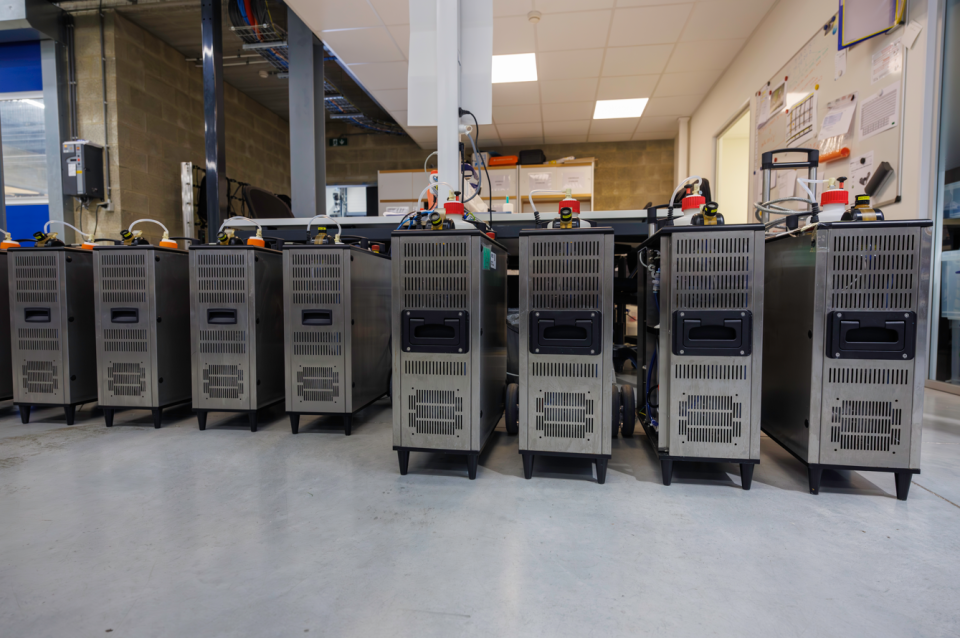
Both VHP and VH₂O₂ rely on the use of hydrogen peroxide in bio-decontamination processes. This similarity explains why these terms are often used interchangeably in technical discussions and decontamination projects.
For users, the distinction between the various terms is sometimes less important than the process’s ability to meet the requirements of the environment being treated. The main question therefore remains the same: how can effective, reproducible bio-decontamination be implemented in a way that is suited to the facility’s constraints ?
VHP and VH₂O₂: two approaches based on hydrogen peroxide
VHP and VH₂O₂ technologies use hydrogen peroxide to carry out biocontamination processes in controlled environments.
Beyond the terminology used in the market, quality managers, validation engineers and plant operators are primarily looking for a solution capable of meeting their operational objectives. The assessment of a technology must therefore not be limited to its name, but must take into account its integration into the relevant environment and its ability to adapt to the site’s requirements.
Factors influencing the choice of a bio-decontamination technology
The choice of a bio-decontamination solution is based on several criteria. A preliminary needs analysis helps to identify the most suitable technology for each application.
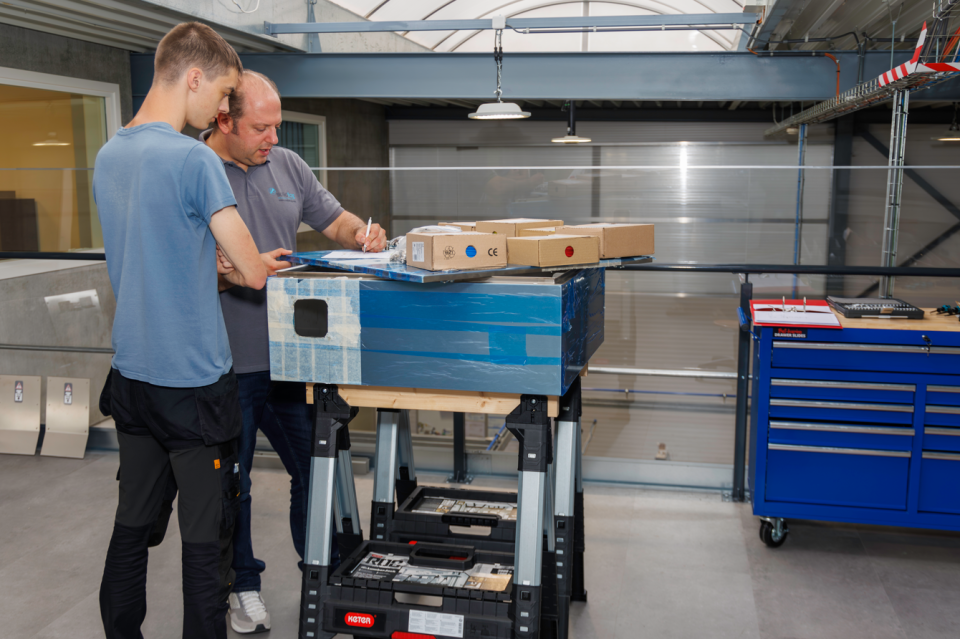
The environment to be treated
Every facility has its own specific constraints. A cleanroom, an isolator, a RABS or a laboratory each have different layouts, which directly influence the choice of process.
The volume to be treated, the layout of the equipment and the airflows must all be taken into account in order to ensure that the treatment conditions are suited to the environment in question.
The objectives of bio-decontamination
Requirements vary depending on the application and sector. Some operations involve aseptic production areas, whilst others focus on equipment or confined spaces.
The objectives set for the project influence the choice of technology and the parameters to be used during the biodecontamination cycles.
Operational constraints
Operational constraints also play an important role in selecting a solution.
The frequency of operations, the layout of the site and the desired level of automation can influence the choice between a mobile system, a fixed installation or a solution integrated into existing equipment.
Validation and traceability requirements
In regulated environments, validation and traceability are essential criteria.
The ability to document the operations carried out, monitor process parameters and reproduce cycles under controlled conditions directly influences the choice of a bio-decontamination solution.
Beyond the technology, a thorough understanding of the process remains essential
Choosing a technology is a key step in a bio-decontamination project. However, the effectiveness of a cycle also depends on controlling the parameters that influence the process.
Temperature, relative humidity, air circulation and the characteristics of the environment being treated all have a direct impact on treatment conditions. Controlling these factors remains essential to ensure reproducible operations and to facilitate validation procedures.
In regulated environments, this control also contributes to the traceability of the operations carried out.
Solidfog’s approach to bio-decontamination using VH₂O₂
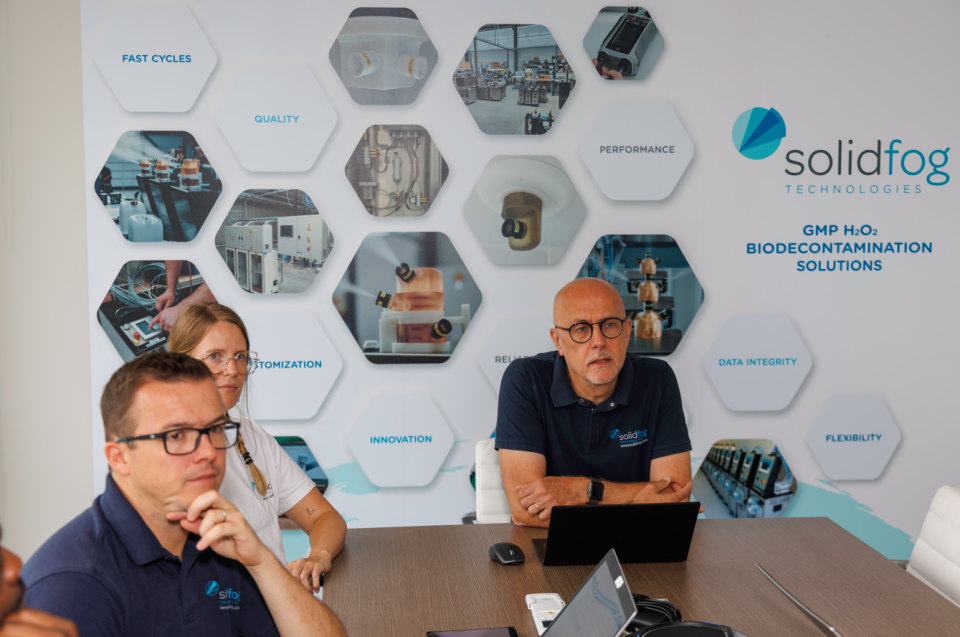
Solidfog develops VH₂O₂-based bio-decontamination solutions for environments where controlling contamination is a major challenge. This expertise is particularly relevant to cleanrooms, isolators, RABS and laboratories.
Beyond the technology used, the effectiveness of a bio-decontamination operation depends on a thorough understanding of the environment being treated and its specific constraints. This is why process control plays a key role in the approach developed by Solidfog.
The aim is to support users in implementing solutions tailored to their operational requirements and their bio-decontamination strategy.
Choosing a solution suited to your decontamination environment
The choice between VHP and VH₂O₂ should not be limited to a comparison of terminology. An analysis of the environment, the bio-decontamination objectives and operational constraints enables the most suitable solution for each project to be identified.
The technology used is an important factor, but mastery of the process remains just as essential. It is this combination that enables us to meet the requirements of critical environments and ensure the safety of bio-decontamination operations.